

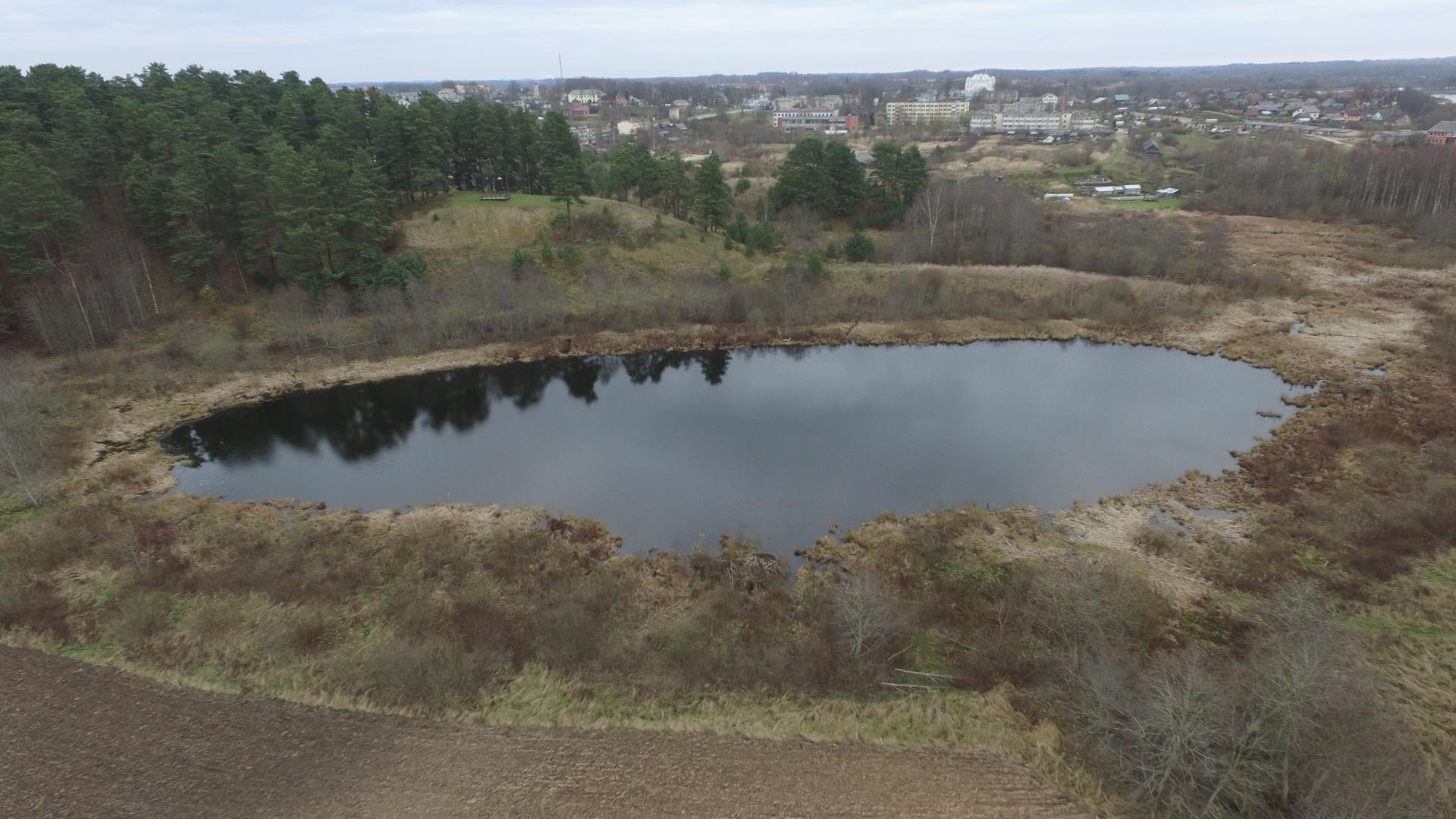
The hillfort is also sometimes called Lubāns, Lapsu, or Priežu Hill. It rises approximately 30 meters above the surrounding terrain, with an absolute height of about 174 meters above sea level. The hillfort is situated at the southeastern end of a longer ridge, separated by an artificially deepened valley. Its plateau measures roughly 50 × 40 meters and in ancient times served as the site of a fortified settlement. Even today, spring water flows clearly from the hill. A cultural layer has been identified on the hill and its slopes, and the clay vessel shards found there indicate that the hillfort was inhabited from the 1st millennium BCE to the 1st century CE. Lubāns Hill – the hillfort – is an archaeological monument of national significance (No. 1067).
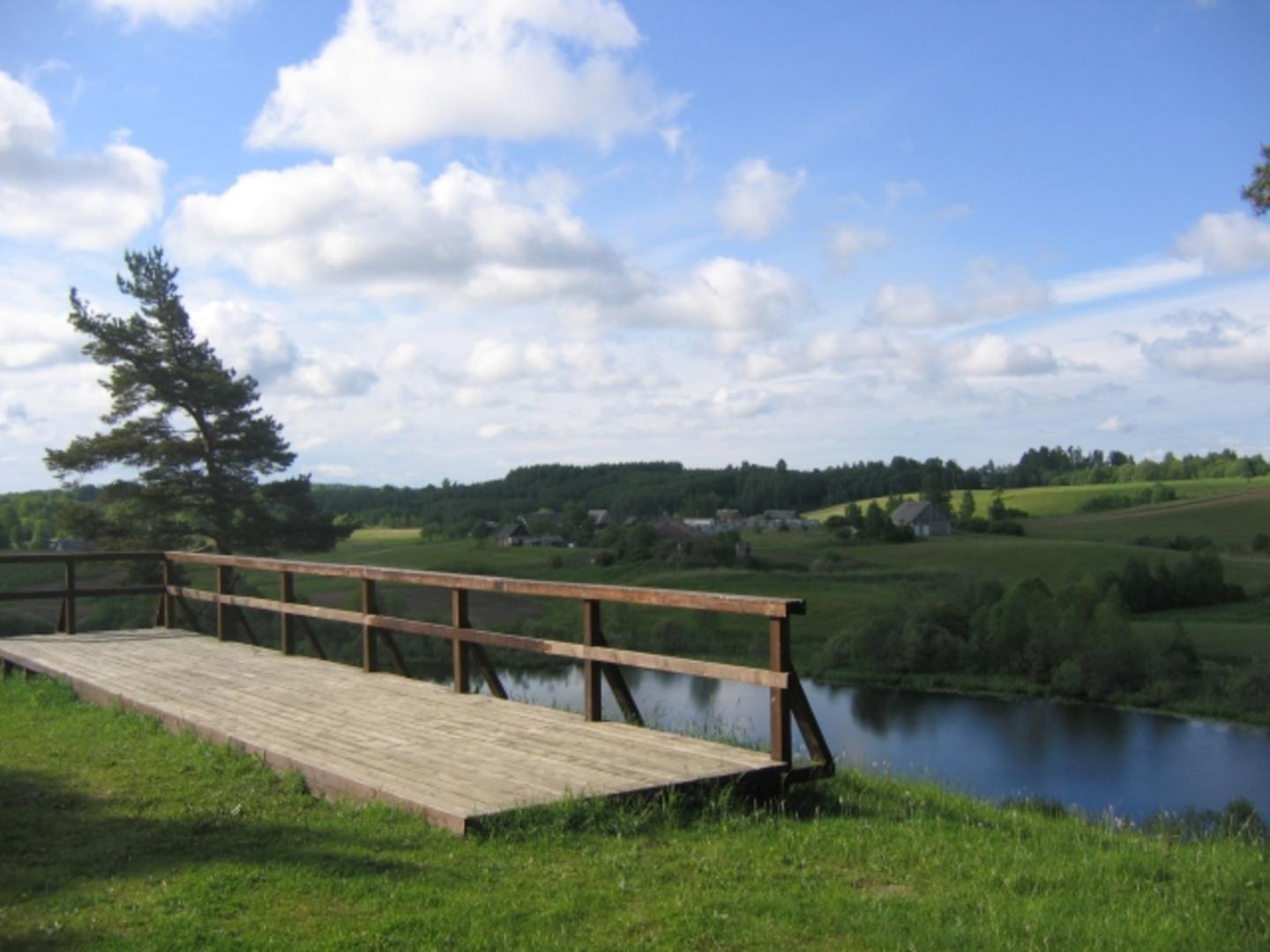
At the foot of the hill stretches Luboneņa Lake – a small but deep body of water, covering an area of about 0.8 hectares and reaching depths of up to 10 meters. The lake enriches the landscape of the hillfort and formerly separated the hill from Lake Dagda. Folk legends tell that a church once stood on the hilltop but sank into the ground. Lubāns Hillfort is a popular place for walks and sightseeing, offering a wide view of the town of Dagda and the surrounding fields. It is a cultural monument of national significance and part of Latvia’s heritage of ancient hillforts.

